Fronterio vs Manual EU AI Act Compliance
Some organisations attempt EU AI Act compliance through manual processes: Word documents, email approvals, and periodic reviews. While this can work for small deployments, it creates significant risk as AI use grows.
The Manual Compliance Approach
Manual EU AI Act compliance typically involves: creating Word or PDF documents for risk assessments, sending emails for approval workflows, maintaining checklists in project management tools, scheduling periodic compliance reviews in calendars, and storing evidence in shared folders. This approach has fundamental problems: it is slow (weeks instead of minutes for risk classification), error-prone (human judgment without structured frameworks), inconsistent (different people classify similar AI systems differently), hard to audit (no immutable trail of decisions), and impossible to scale (each new AI tool requires hours of manual work).
Automated Compliance with Fronterio
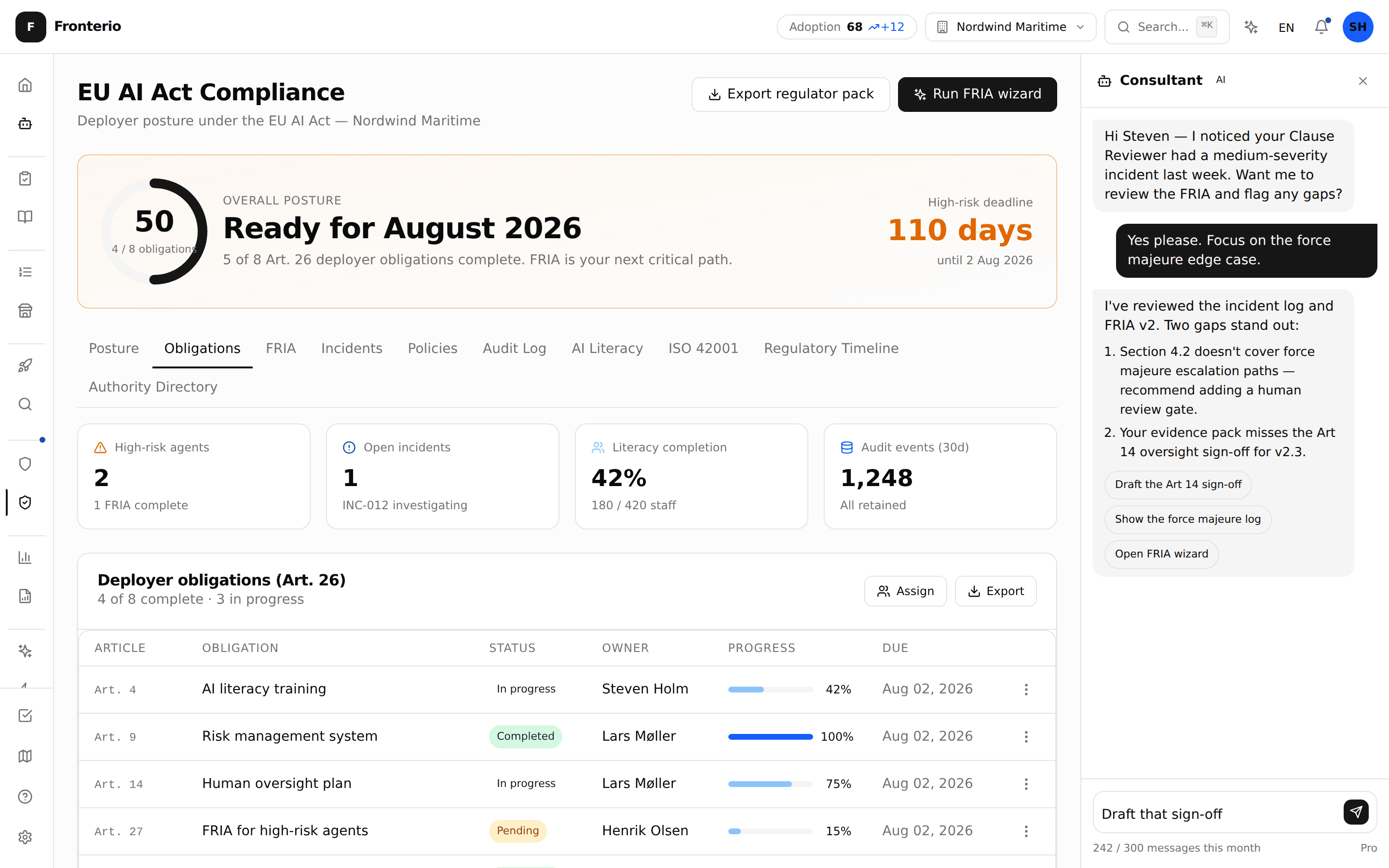
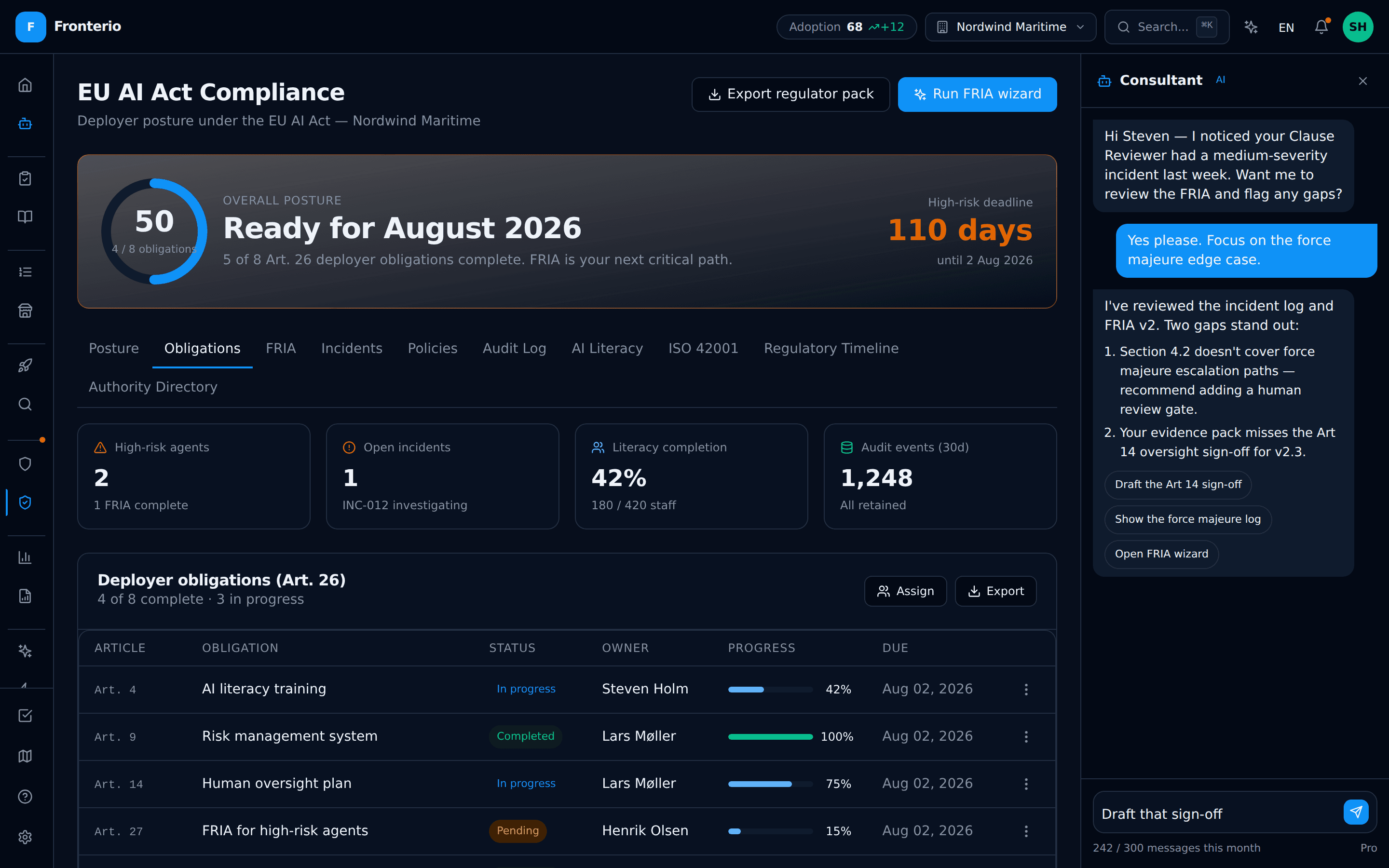
Fronterio automates EU AI Act compliance for deployers. Risk classification uses structured questionnaires that map directly to EU AI Act categories: the system classifies AI agents into unacceptable, high, limited, or minimal risk based on their purpose and data access. The deployer obligations checklist tracks all 8 Article 26 requirements with assigned owners and evidence links. The FRIA wizard guides teams through Fundamental Rights Impact Assessments step by step. AI literacy training is tracked per employee. The immutable audit log captures every governance action for regulatory evidence. Compliance PDF reports can be generated instantly for auditors.
The Cost of Getting It Wrong
Manuaalisen vaatimustenmukaisuuden todellinen kustannus on harvoin otsikoiden sakko — se on arjen kitka: todisteet, joita ette pysty esittämään kun hankinta kysyy, auditointikysymykset, joihin vastaaminen vie viikkoja, riskiluokitukset, jotka vanhenevat heti kirjoitettuaan, ja toiminnan häiriöt aina, kun viranomainen tai enterprise-asiakas haluaa nähdä näyttöä. EU AI Actin korkean riskin velvoitteet tulevat voimaan joulukuussa 2027 — riittävästi aikaa rakentaa valmius kunnolla kiirehtimisen sijaan. Dedikoitu alusta tekee asian oikein tekemisestä edullisen vaihtoehdon: Fronterio alkaa 299 eurosta/kk, täydellinen EU AI Act -käyttöönottajan työkalupakki mukana.
Compliance is the floor. Value is the goal.
Manuaaliset vaatimustenmukaisuusprosessit pysähtyvät velvoitteiden tarkistuslistaan. Ne eivät koskaan yhdistä näyttöä siihen transformaatioon, joka riskin alun perin loi. Fronterio käsittelee vaatimustenmukaisuutta lattiana, jolla transformaatio kulkee: velvoitteet seurataan omistajineen ja näyttöineen, ne sijoitetaan niiden transformaatioiden rinnalle, joiden arvoa ne suojaavat, OKR:t sidotaan 26 artiklan velvollisuuksiin siellä, missä sillä on merkitystä, ja Executive Board Pack näyttää hallitukselle riskin arvon rinnalla yhdellä vierityksellä. Vaatimustenmukaisuudesta tulee ominaisuus siinä, miten toimitatte, ei jälkikäteinen tarkastusharjoitus.
Article 26(5) Continuity: a Runbook, Not a Memo
Article 26(5) obliges deployers to monitor operation and maintain continuity plans. A manual process answers that with a Word document nobody reads until the incident. Fronterio's AI Vendor Resilience (Enterprise) answers it with a credentialed drill per workload: a timestamped, append-only record that the Mistral Le Chat Enterprise fallback is genuinely live today, that its capabilities match your Copilot primary, and that the EU-sovereign posture meets your data-residency requirements. The auditor asks one question about continuity; you hand them the drill log.
Ready to see the difference?
- Free AI Value Scan — see where AI could create value, no credit card required
- Yksityisen lanseerauksen käyttöoikeus kattaa koko alustan.
- EU AI Act compliance included from Pro