Fronterio vs Manual EU AI Act Compliance
Some organisations attempt EU AI Act compliance through manual processes: Word documents, email approvals, and periodic reviews. While this can work for small deployments, it creates significant risk as AI use grows.
The Manual Compliance Approach
Manual EU AI Act compliance typically involves: creating Word or PDF documents for risk assessments, sending emails for approval workflows, maintaining checklists in project management tools, scheduling periodic compliance reviews in calendars, and storing evidence in shared folders. This approach has fundamental problems: it is slow (weeks instead of minutes for risk classification), error-prone (human judgment without structured frameworks), inconsistent (different people classify similar AI systems differently), hard to audit (no immutable trail of decisions), and impossible to scale (each new AI tool requires hours of manual work).
Automated Compliance with Fronterio
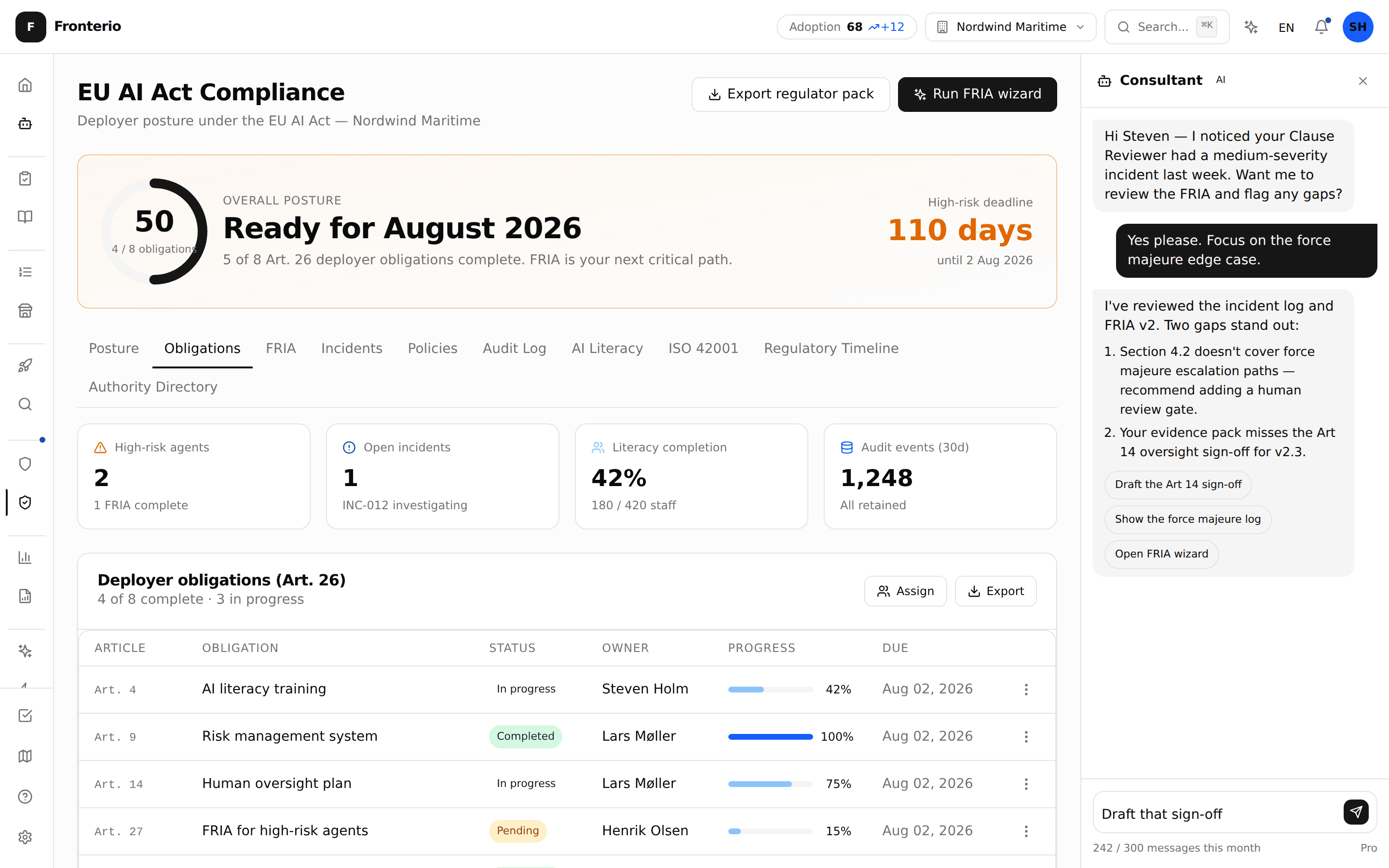
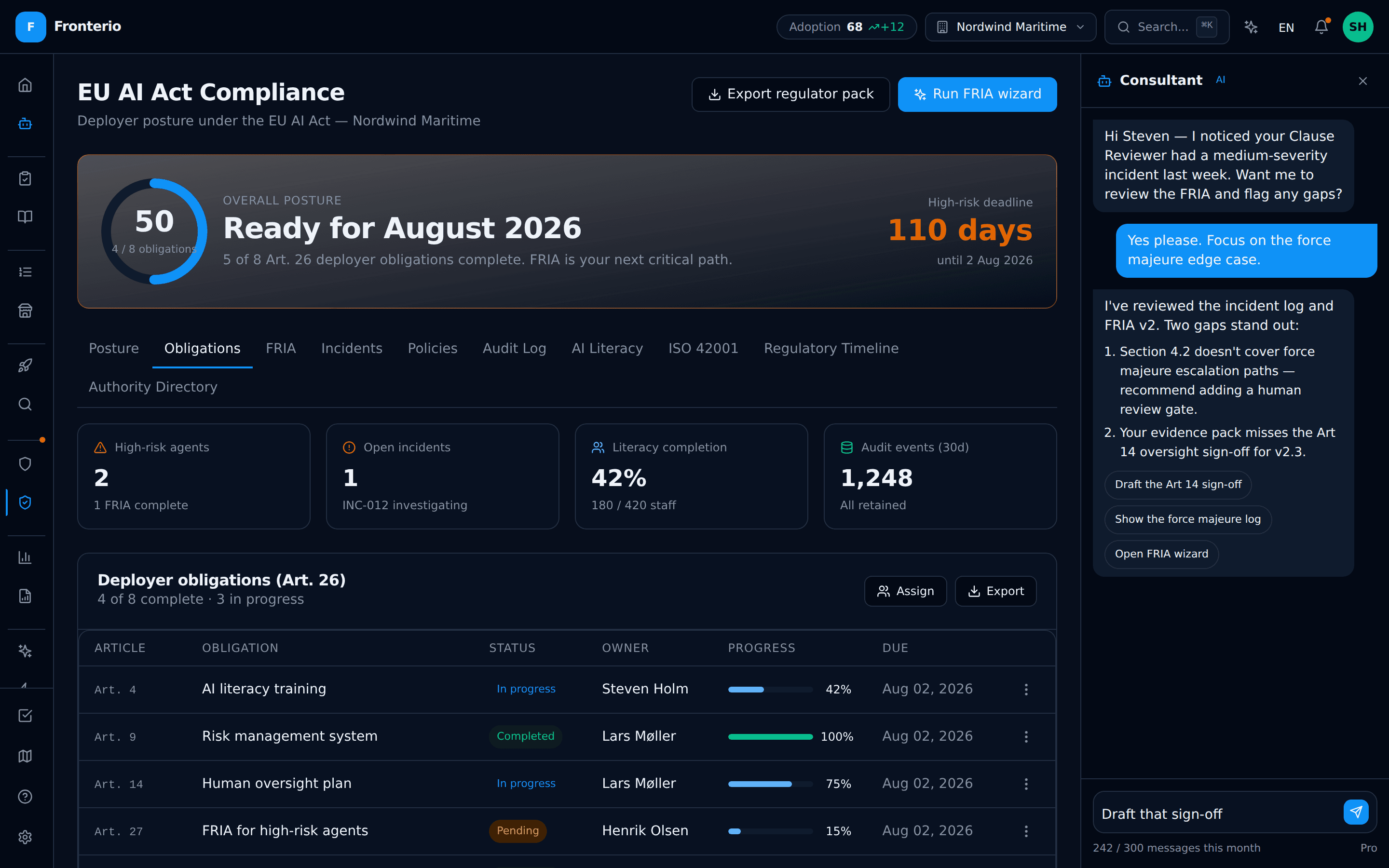
Fronterio automates EU AI Act compliance for deployers. Risk classification uses structured questionnaires that map directly to EU AI Act categories: the system classifies AI agents into unacceptable, high, limited, or minimal risk based on their purpose and data access. The deployer obligations checklist tracks all 8 Article 26 requirements with assigned owners and evidence links. The FRIA wizard guides teams through Fundamental Rights Impact Assessments step by step. AI literacy training is tracked per employee. The immutable audit log captures every governance action for regulatory evidence. Compliance PDF reports can be generated instantly for auditors.
The Cost of Getting It Wrong
Die wirklichen Kosten manueller Compliance sind selten das Bußgeld aus der Schlagzeile — es ist die tägliche Reibung: Nachweise, die Sie nicht vorlegen können, wenn der Einkauf fragt, Audit-Fragen, deren Beantwortung Wochen dauert, Risikoklassifizierungen, die im Moment ihrer Erstellung veralten, und Betriebsstörungen, wann immer eine Behörde oder ein Enterprise-Kunde Belege sehen will. Die Hochrisiko-Pflichten des EU AI Act gelten ab Dezember 2027 — genug Zeit, Bereitschaft ordentlich aufzubauen, statt zu hetzen. Eine dedizierte Plattform macht den richtigen Weg zur günstigen Option: Fronterio bringt das vollständige EU-AI-Act-Deployer-Toolkit mit.
Compliance is the floor. Value is the goal.
Manuelle Compliance-Prozesse enden bei der Pflichten-Checkliste. Sie verbinden die Evidenz nie mit der Transformation, die das Risiko überhaupt erst erzeugt hat. Fronterio behandelt Compliance als den Boden, auf dem die Transformation läuft: Pflichten mit Verantwortlichen und Evidenz verfolgt, neben den Transformationen eingeordnet, deren Wert sie schützen, OKRs an Artikel-26-Pflichten gebunden, wo das zählt, und ein Executive Board Pack, das dem Vorstand Risiko neben Wert in einem Scroll zeigt. Compliance wird zu einer Eigenschaft Ihrer Umsetzung, nicht zu einer nachträglichen Prüfübung.
Article 26(5) Continuity: a Runbook, Not a Memo
Article 26(5) obliges deployers to monitor operation and maintain continuity plans. A manual process answers that with a Word document nobody reads until the incident. Fronterio's AI Vendor Resilience (Enterprise) answers it with a credentialed drill per workload: a timestamped, append-only record that the Mistral Le Chat Enterprise fallback is genuinely live today, that its capabilities match your Copilot primary, and that the EU-sovereign posture meets your data-residency requirements. The auditor asks one question about continuity; you hand them the drill log.
Ready to see the difference?
- Free AI Value Scan — see where AI could create value, no credit card required
- Der Zugang im Private Launch umfasst die vollständige Plattform.
- EU AI Act compliance included from Pro