Fronterio vs Manual EU AI Act Compliance
Some organisations attempt EU AI Act compliance through manual processes: Word documents, email approvals, and periodic reviews. While this can work for small deployments, it creates significant risk as AI use grows.
The Manual Compliance Approach
Manual EU AI Act compliance typically involves: creating Word or PDF documents for risk assessments, sending emails for approval workflows, maintaining checklists in project management tools, scheduling periodic compliance reviews in calendars, and storing evidence in shared folders. This approach has fundamental problems: it is slow (weeks instead of minutes for risk classification), error-prone (human judgment without structured frameworks), inconsistent (different people classify similar AI systems differently), hard to audit (no immutable trail of decisions), and impossible to scale (each new AI tool requires hours of manual work).
Automated Compliance with Fronterio
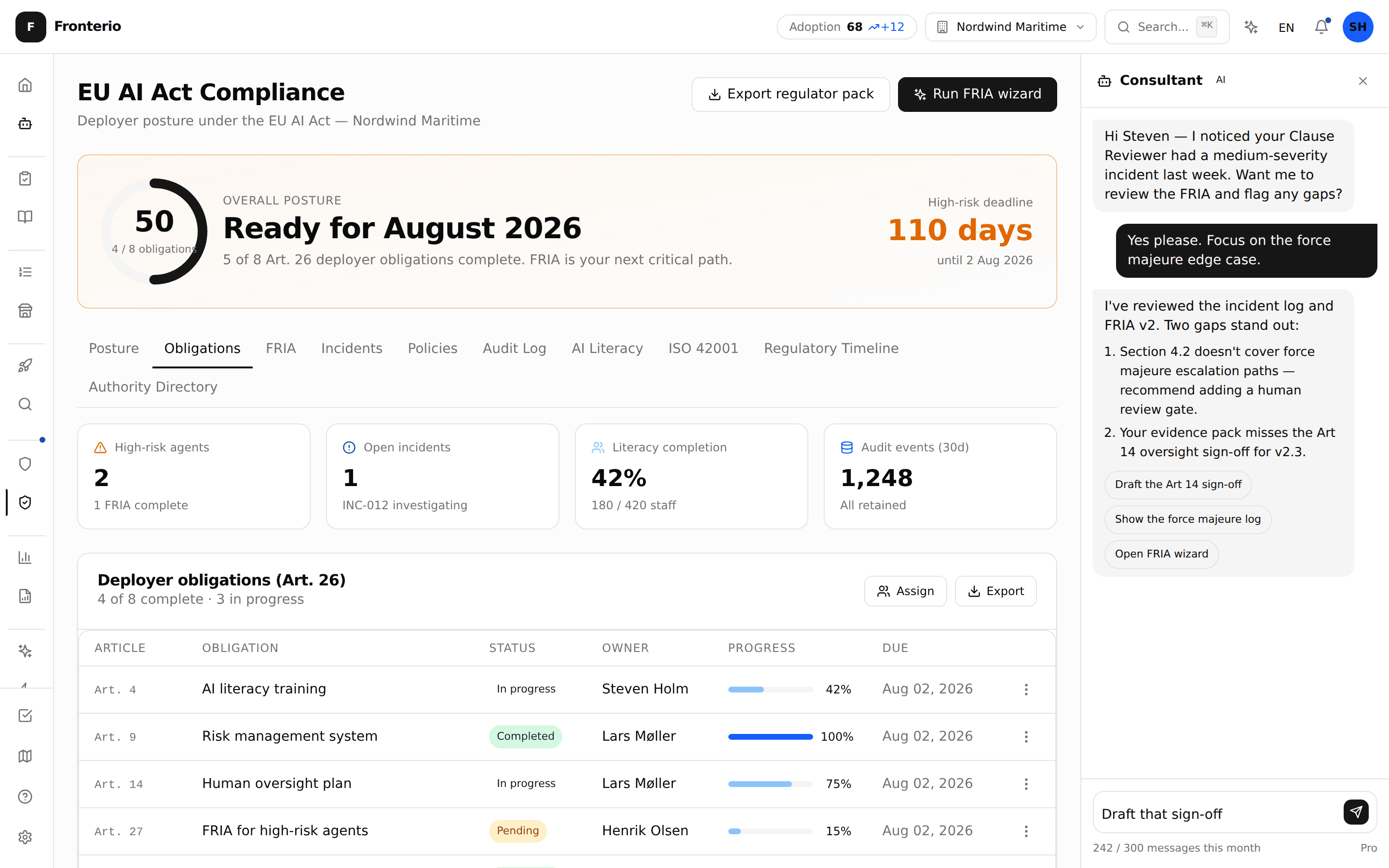
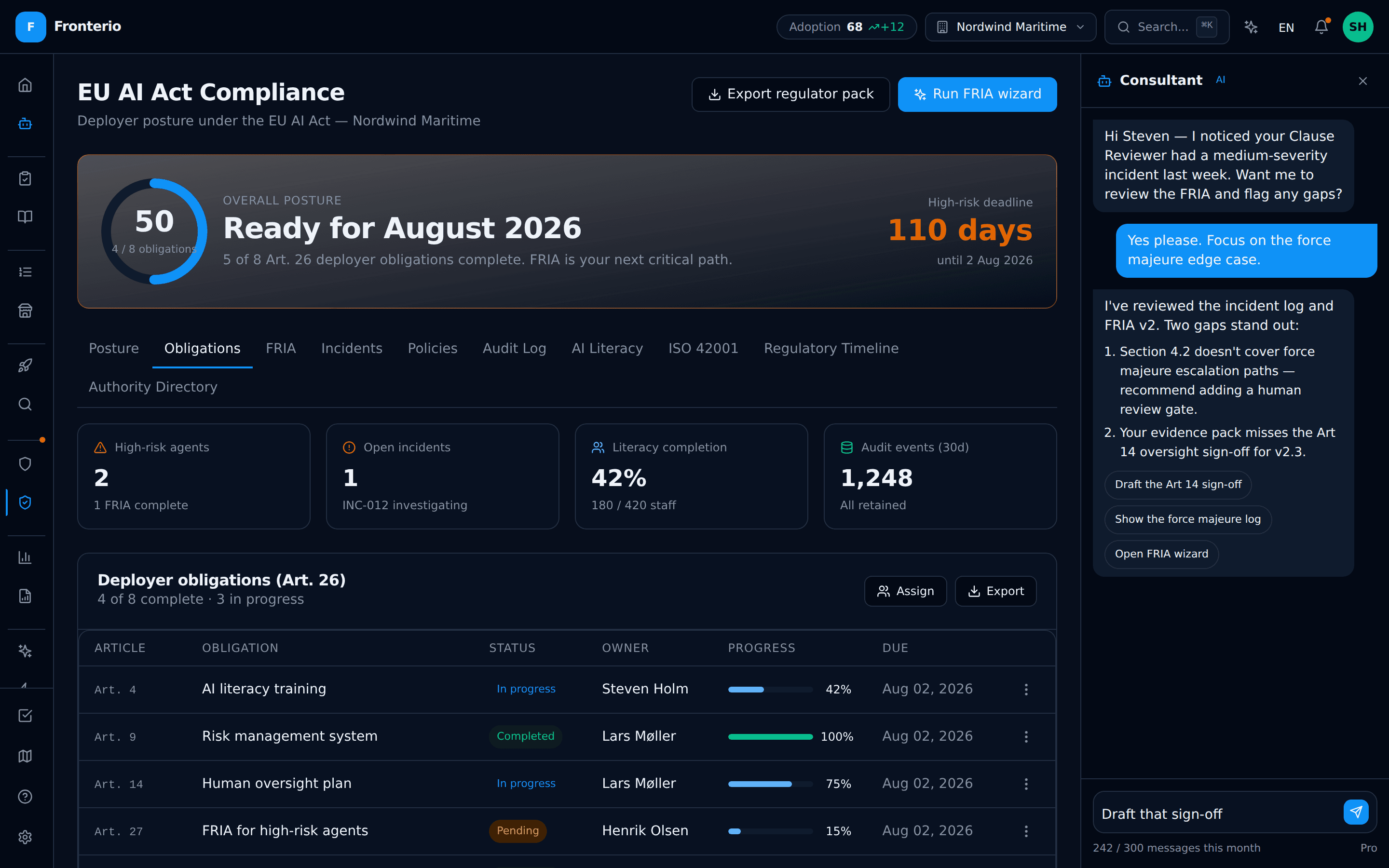
Fronterio automates EU AI Act compliance for deployers. Risk classification uses structured questionnaires that map directly to EU AI Act categories: the system classifies AI agents into unacceptable, high, limited, or minimal risk based on their purpose and data access. The deployer obligations checklist tracks all 8 Article 26 requirements with assigned owners and evidence links. The FRIA wizard guides teams through Fundamental Rights Impact Assessments step by step. AI literacy training is tracked per employee. The immutable audit log captures every governance action for regulatory evidence. Compliance PDF reports can be generated instantly for auditors.
The Cost of Getting It Wrong
Den verkliga kostnaden för manuell efterlevnad är sällan bötesbeloppet i rubrikerna — det är det dagliga slitaget: bevis ni inte kan ta fram när upphandlingen frågar, revisionsfrågor som tar veckor att besvara, riskklassificeringar som är inaktuella i samma stund de skrivs, och driftstörningar varje gång en myndighet eller enterprise-kund vill se belägg. EU AI Act:s högriskskyldigheter gäller från december 2027 — tid nog att bygga beredskap ordentligt i stället för att stressa. En dedikerad plattform gör rätt sak till det billiga alternativet: Fronterio innehåller den kompletta EU AI Act-verktygslådan för deployers.
Compliance is the floor. Value is the goal.
Manuella efterlevnadsprocesser stannar vid checklistan över skyldigheter. De kopplar aldrig underlaget till den transformation som skapade risken från början. Fronterio behandlar efterlevnad som golvet transformationen löper på: skyldigheter spårade med ägare och underlag, sekvenserade bredvid de transformationer vars värde de skyddar, OKR:er knutna till artikel 26-skyldigheter där det spelar roll, och ett Executive Board Pack som visar styrelsen risk bredvid värde i en scroll. Efterlevnad blir en egenskap hos hur ni levererar, inte en revisionsövning i efterhand.
Article 26(5) Continuity: a Runbook, Not a Memo
Article 26(5) obliges deployers to monitor operation and maintain continuity plans. A manual process answers that with a Word document nobody reads until the incident. Fronterio's AI Vendor Resilience (Enterprise) answers it with a credentialed drill per workload: a timestamped, append-only record that the Mistral Le Chat Enterprise fallback is genuinely live today, that its capabilities match your Copilot primary, and that the EU-sovereign posture meets your data-residency requirements. The auditor asks one question about continuity; you hand them the drill log.
Ready to see the difference?
- Free AI Value Scan — see where AI could create value, no credit card required
- Åtkomst i den privata lanseringen omfattar hela plattformen.
- EU AI Act compliance included from Pro