Fronterio vs Spreadsheets for AI Governance
Many organisations start tracking their AI tools in spreadsheets. While this works for a handful of tools, it breaks down quickly as AI use scales. Here is how Fronterio — the AI Transformation Platform, with governance built in — compares to spreadsheet-based tracking.
The Spreadsheet Approach
Spreadsheet-based AI governance typically involves a shared Excel file or Google Sheet listing AI tools, their owners, risk levels, and approval status. Teams manually update this file when new tools are adopted or existing ones change. While this is better than nothing, it introduces significant limitations: there is no audit trail (who changed what and when), no automated risk classification, no connection to actual usage data, no compliance workflows, and no way to generate reports for regulators. As the number of AI tools grows beyond 10-15, the spreadsheet becomes a liability rather than an asset.
What a Platform Provides
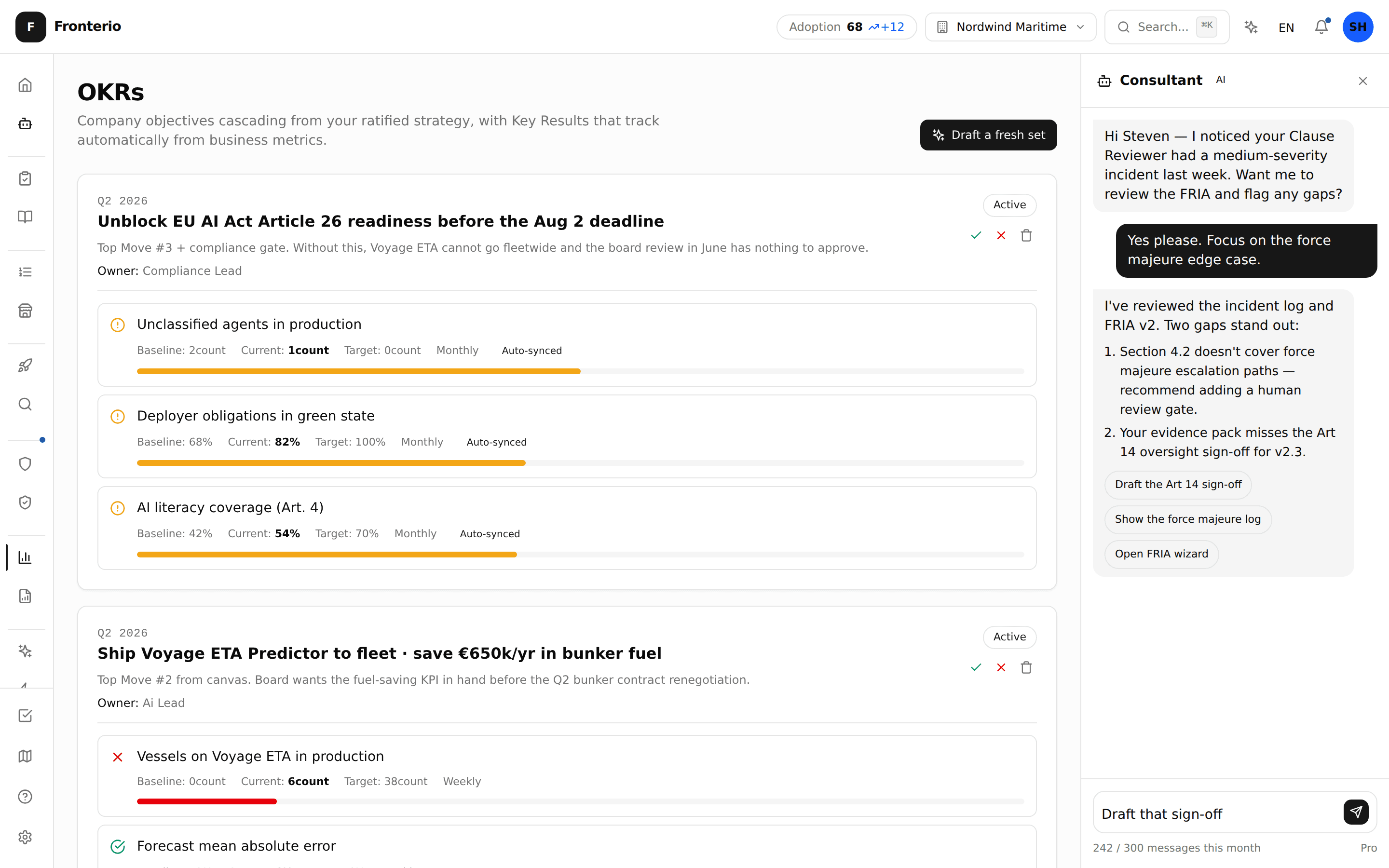
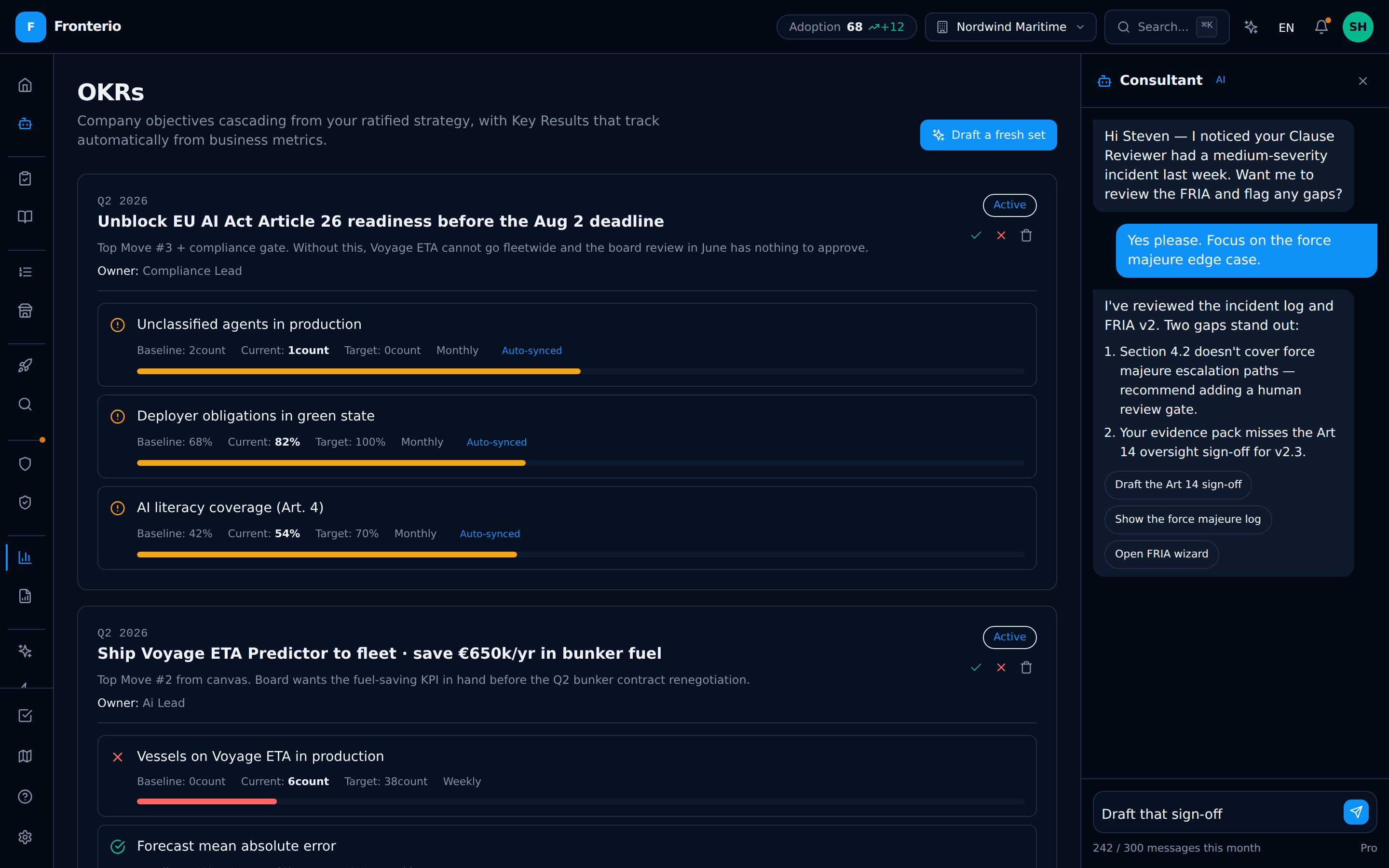
Fronterio automates what spreadsheets cannot. Every AI agent is registered with structured metadata (purpose, autonomy level, data access, risk classification). Changes are tracked in an immutable audit log that regulators can review. Risk classification follows EU AI Act categories automatically based on structured questionnaire responses. Approval workflows route new agents to the right stakeholders. Real-time dashboards show compliance posture across the organisation. Integration with Microsoft 365, Google Workspace, and Anthropic Claude pulls actual usage data, no manual updates needed.
When to Switch
Om er organisation använder fler än 5 AI-verktyg, verkar i EU (där EU AI Act gäller), behöver visa governance för revisorer eller myndigheter, eller vill följa AI-adoption och ROI, räcker ett kalkylblad inte längre. Den verkliga kostnaden är kaoset, inte ett hypotetiskt bötesbelopp: inaktuella rader ingen litar på, bevis ni inte kan ta fram när en revisor eller enterprise-kund frågar, och personaltid som bränns på manuellt underhåll. En plattform är en bråkdel av det — och den för ett register ni faktiskt kan lämna över.
Bortom inventeringen: ett rangordnat svar
Ett kalkylblad listar vad ni har. Fronterio talar om vad ni ska göra härnäst. Ovanför inventeringen sitter Möjligheter: varje rekommendation rangordnad med sitt värdecase, sin konfidens och varför nu, matad av strategikanvasen, 12-månadersfärdplanen, asynkrona workshoppar, OKR:er och Executive Board Pack i stället för att konkurrera med dem. Inget av detta går i ett kalkylblad. Datan är statisk, beslutet dör i filen, och styrelsen ser aldrig kopplingen mellan inventering och effekt.
No Spreadsheet Drills a Failover
A spreadsheet cannot tell you whether your fallback AI vendor is actually reachable right now. Fronterio's AI Vendor Resilience (Enterprise) does: a one-click drill validates that the Mistral or Aleph Alpha credentials are live, that the fallback's capabilities cover your primary, that the compliance posture is equivalent or better, and that your guardrails transfer. The result lands in an append-only drill log your auditor can inspect. The spreadsheet row that says 'Mistral: approved fallback' is a promise. A drilled resilience plan is evidence.
Ready to see the difference?
- Free AI Value Scan — see where AI could create value, no credit card required
- Åtkomst i den privata lanseringen omfattar hela plattformen.
- EU AI Act compliance included from Pro