Fronterio vs Manual EU AI Act Compliance
Some organisations attempt EU AI Act compliance through manual processes: Word documents, email approvals, and periodic reviews. While this can work for small deployments, it creates significant risk as AI use grows.
The Manual Compliance Approach
Manual EU AI Act compliance typically involves: creating Word or PDF documents for risk assessments, sending emails for approval workflows, maintaining checklists in project management tools, scheduling periodic compliance reviews in calendars, and storing evidence in shared folders. This approach has fundamental problems: it is slow (weeks instead of minutes for risk classification), error-prone (human judgment without structured frameworks), inconsistent (different people classify similar AI systems differently), hard to audit (no immutable trail of decisions), and impossible to scale (each new AI tool requires hours of manual work).
Automated Compliance with Fronterio
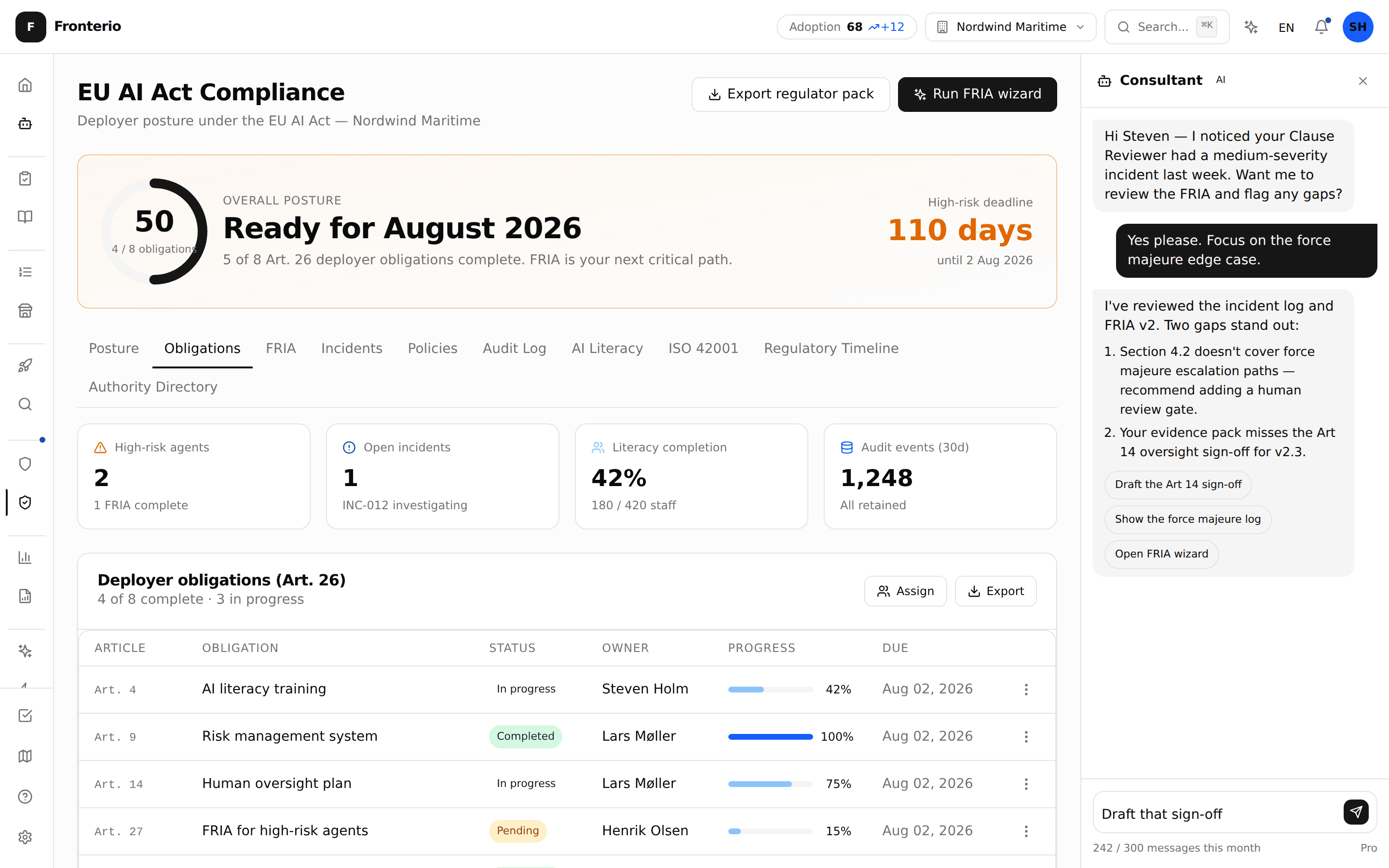
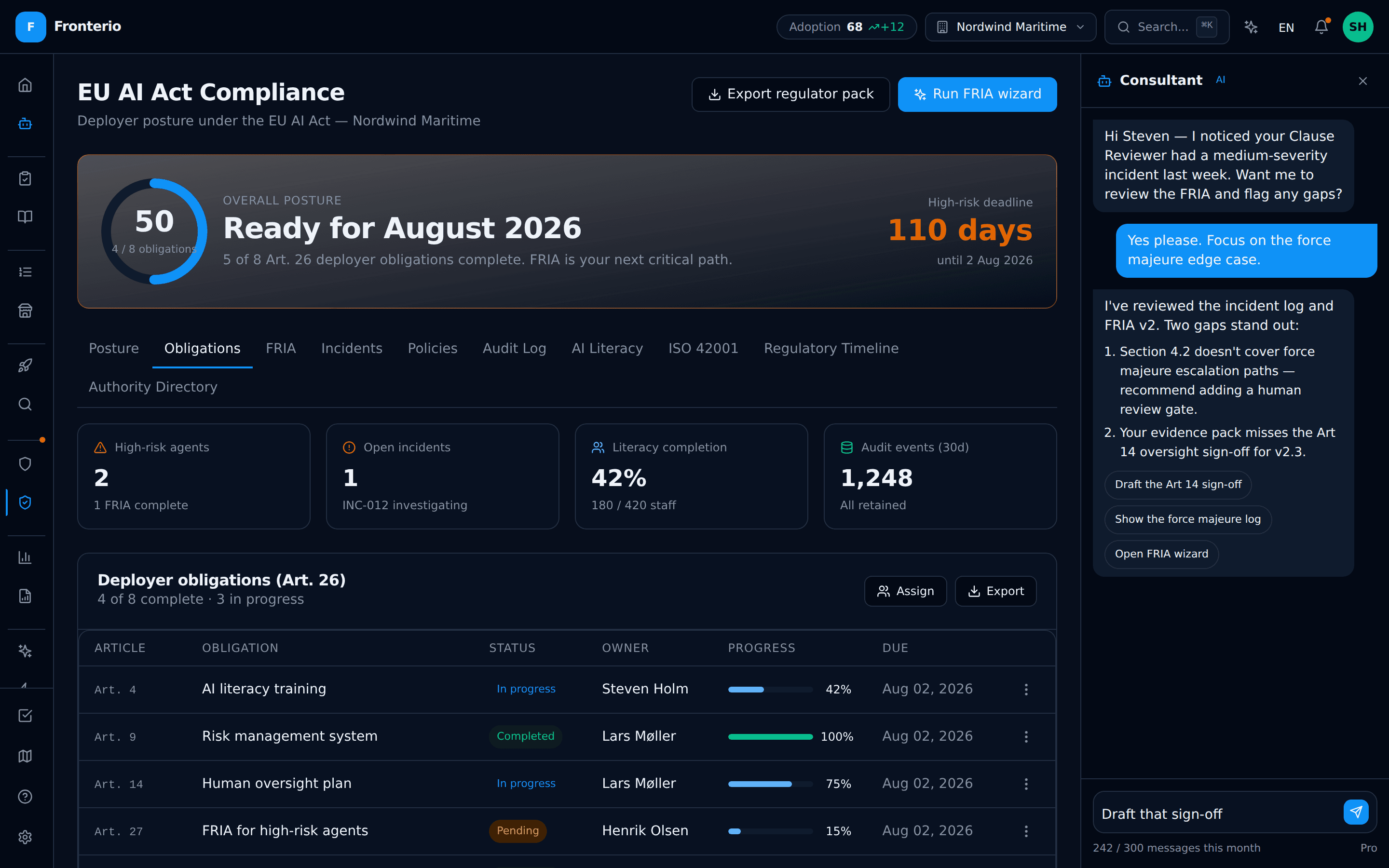
Fronterio automates EU AI Act compliance for deployers. Risk classification uses structured questionnaires that map directly to EU AI Act categories: the system classifies AI agents into unacceptable, high, limited, or minimal risk based on their purpose and data access. The deployer obligations checklist tracks all 8 Article 26 requirements with assigned owners and evidence links. The FRIA wizard guides teams through Fundamental Rights Impact Assessments step by step. AI literacy training is tracked per employee. The immutable audit log captures every governance action for regulatory evidence. Compliance PDF reports can be generated instantly for auditors.
The Cost of Getting It Wrong
De werkelijke kosten van handmatige compliance zijn zelden de boete uit de krantenkop — het is de dagelijkse frictie: bewijs dat je niet kunt overleggen wanneer inkoop erom vraagt, auditvragen die weken kosten om te beantwoorden, risicoclassificaties die verouderd zijn zodra ze zijn opgeschreven, en operationele verstoring telkens wanneer een toezichthouder of enterprise-klant bewijs wil zien. De hoog-risicoverplichtingen van de EU AI Act gelden vanaf december 2027 — genoeg tijd om gereedheid goed op te bouwen in plaats van te haasten. Een dedicated platform maakt het goed doen de goedkope optie: Fronterio bevat de complete EU AI Act-toolkit voor deployers.
Compliance is the floor. Value is the goal.
Handmatige complianceprocessen stoppen bij de checklist van verplichtingen. Ze verbinden het bewijs nooit met de transformatie die het risico in de eerste plaats heeft veroorzaakt. Fronterio behandelt compliance als de vloer waarop de transformatie loopt: verplichtingen gevolgd met eigenaren en bewijs, gepland naast de transformaties waarvan ze de waarde beschermen, OKR's gekoppeld aan artikel 26-plichten waar dat ertoe doet, en een Executive Board Pack dat het bestuur risico naast waarde toont in één scroll. Compliance wordt een eigenschap van hoe je oplevert, geen auditoefening achteraf.
Article 26(5) Continuity: a Runbook, Not a Memo
Article 26(5) obliges deployers to monitor operation and maintain continuity plans. A manual process answers that with a Word document nobody reads until the incident. Fronterio's AI Vendor Resilience (Enterprise) answers it with a credentialed drill per workload: a timestamped, append-only record that the Mistral Le Chat Enterprise fallback is genuinely live today, that its capabilities match your Copilot primary, and that the EU-sovereign posture meets your data-residency requirements. The auditor asks one question about continuity; you hand them the drill log.
Ready to see the difference?
- Free AI Value Scan — see where AI could create value, no credit card required
- Toegang in de private launch omvat het volledige platform.
- EU AI Act compliance included from Pro